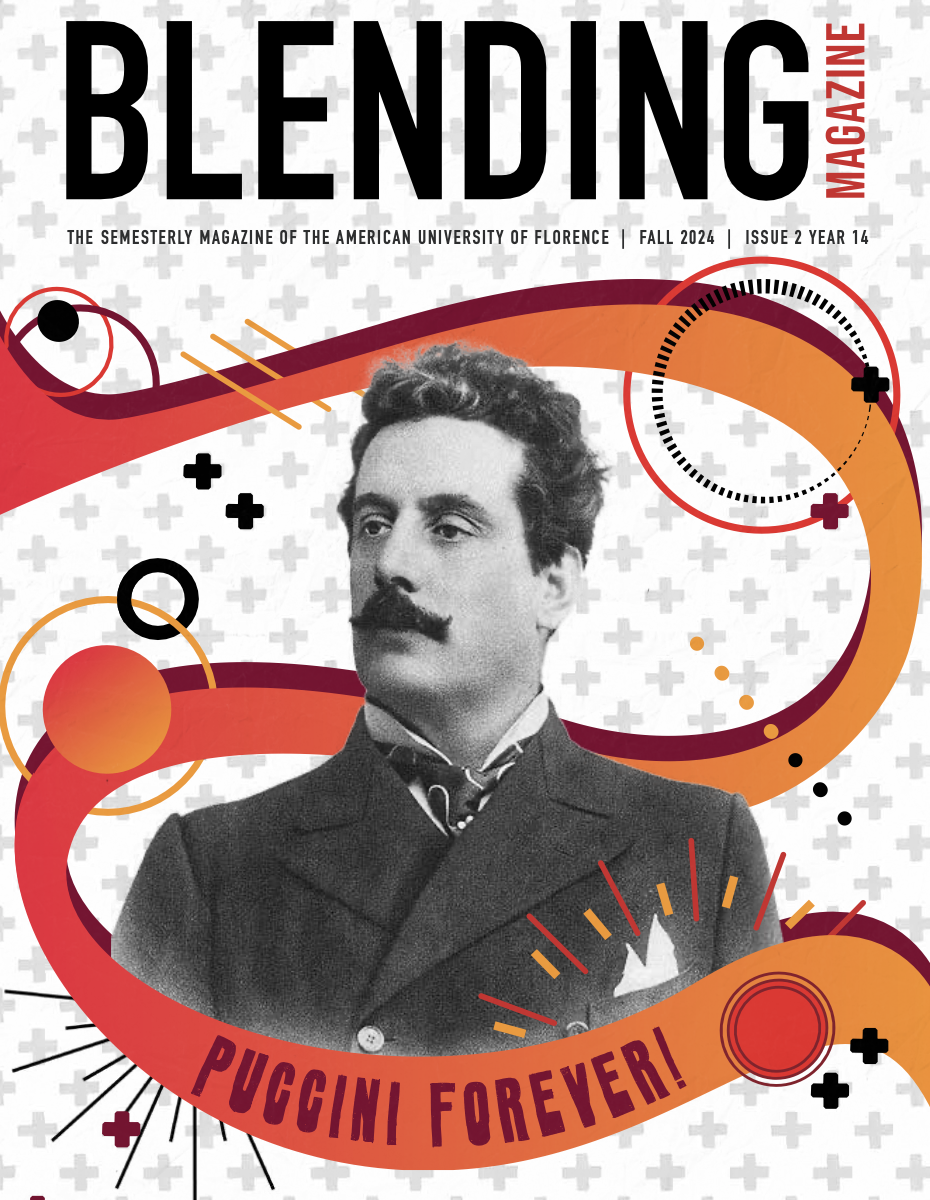
Written for my Gallery and Design class, I was honored to have this article: The Many Loves of Giacomo Puccini (pg.22) selected to be part of the student- run magazine: Blending, during my time at FUA.
During my research on Giacomo Puccini, I stumbled upon a documentary Andreas Morell, entitled Dark Side of the Moon : The Other Life of Giacomo Puccini, this documentary sparked my research into just how impactful Puccini’s love life was on his operatic works. History has its rumors, and Puccini was arguably the womanizer of the century.
This research was accepted into Columns: The Mary Washington Humanities and Social Science Journal and presented at the Spring 2025 research Symposium. This semester project for ARTH 317: Roman Art involves the Vestal Virgins and their significance in Roman imperial messages and religious devotion.
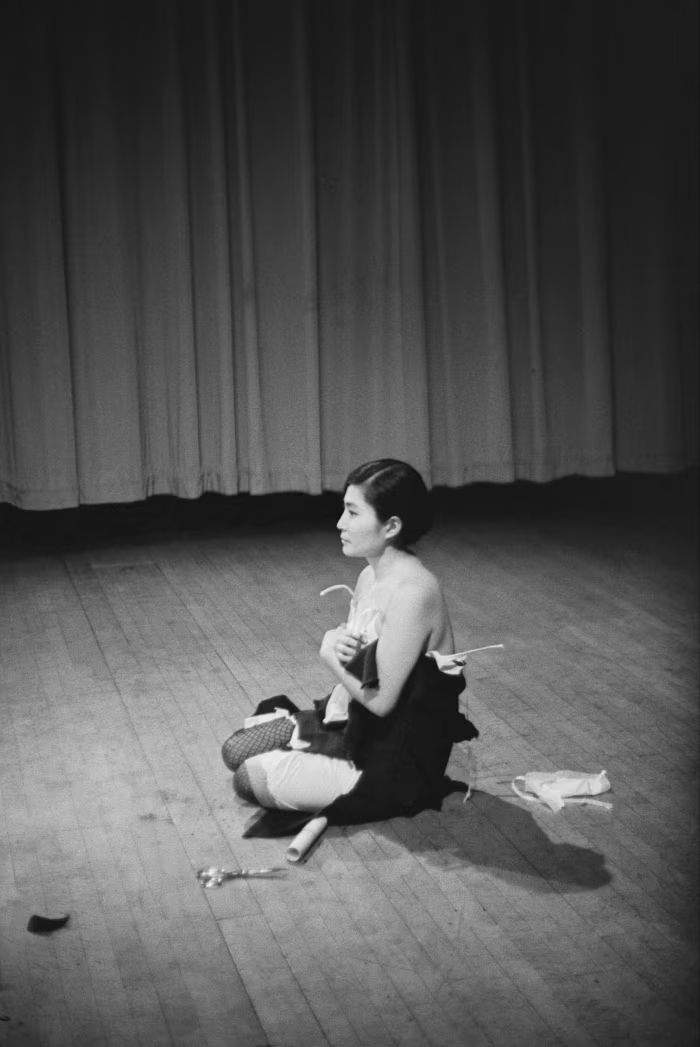
This essay delves into the background of Yoko Ono and her involvement in the Fluxus movement of the 1960s. It explores her artistic methodology during this period, and evaluates her performance Cut Piece as a proto-feminist work. Ono’s intersectional identity as a Japanese-American woman is intricately connected to this analysis, considering the historical fetishization of Asian women. While neither Ono nor her critics initially recognized Cut Piece as a feminist work, it has become culturally understood as such. By offering a concise exploration of its situational context and interpretive evolution, and exploring audience receptions of the work, this essay contends that Cut Piece actively fosters a feminist interpretation with regard to intersectionality and evaluates it as such.
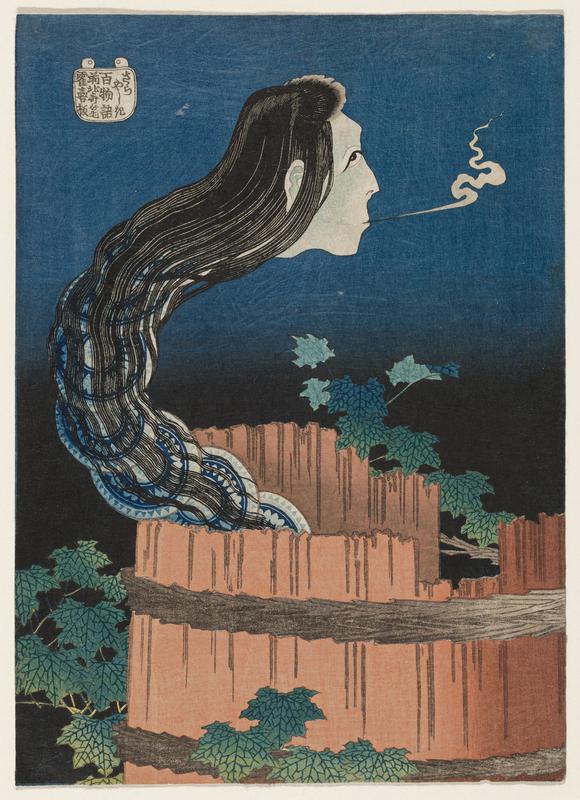
This essay discusses the artist Katsushika Hokusai, and his renowned skill as a Ukiyo-e style woodblock-print artist. This essay focuses particularly on his work The Mansion of the Plates from the series One Hundred Ghost Tales. The print portrays the tragic tale of Okiku, a maid-servant killed by her employer, a samurai named Aoyama Tessan. The analysis delves into the visual elements of the print, emphasizing the composition, use of color, and stylistic features that characterize Hokusai’s artistic approach. It also provides context on the popularity of ghost stories, known as Kaidan, during the Edo period and highlights the cultural significance of Hokusai’s work in this context. The narrative of Okiku and her fate is explored, comparing Hokusai’s representation with other works in the same theme.
This individual project developed over the course of the semester, and was structurally broken down into three categories: the descriptive, the visual, and the theoretical.
Descriptive Analysis
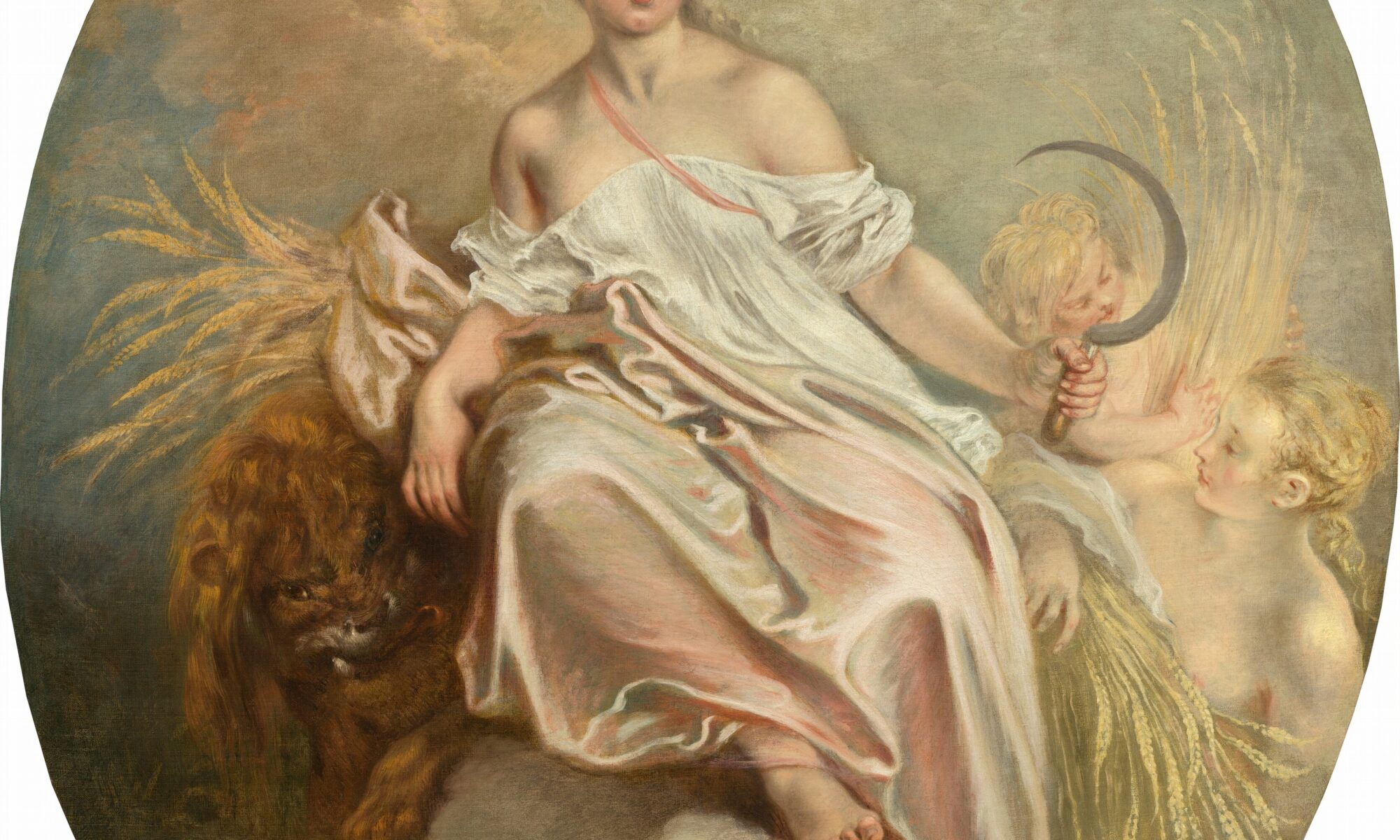
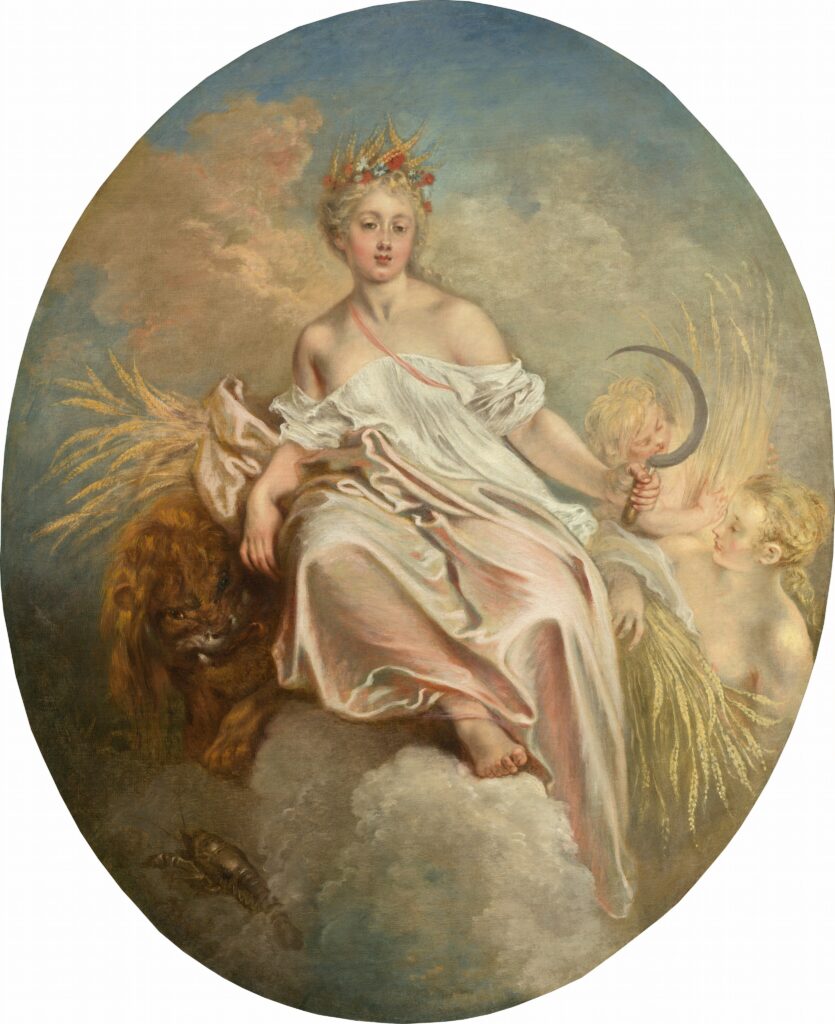
My first essay focuses solely on the physical appearance of Watteau’s Ceres (Summer). This essay treats the work as a tactile object, recognizing the application and textures presented through the work. It also follows a very confused, rather intelligent caterpiller on the way.
Following my descriptive essay, I worked to produce a visual (formal) analysis. This practice systematically goes through each element within a work (in this case, Watteau’s Ceres), identifies it, describes it, and analyzes how it contributes to the work as a whole. It differs from the descriptive in that it promotes inferencing in regards to the artist’s conscious decisions.
Finally, my concentration shifted towards theoretical exploration. More precisely, I employed Iconographic theory to scrutinize the symbolic messages embedded in Ceres. Within this essay, I provide a contextualization of the painting’s contemporary history and examine how Watteau would have acquired an understanding of the symbols integrated into the piece, a canon of symbols used to represent summer since the medieval times.
Summary of Research and Major points of this Essay:
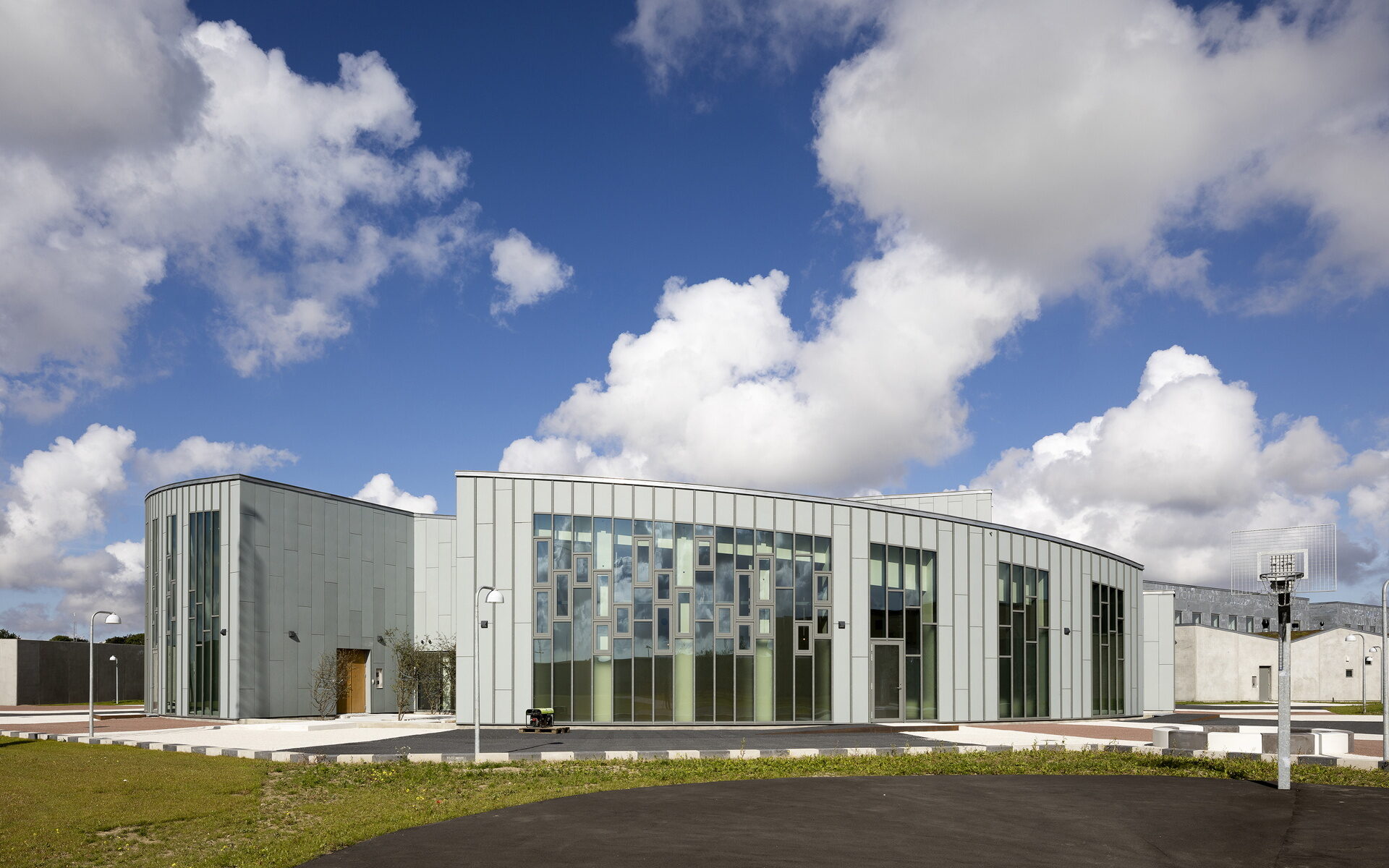
While prisons worldwide share core objectives of protecting the public, punishing offenders, and rehabilitating them, the United States has shifted focus from rehabilitation since the 1960s, resulting in a ‘revolving door’ for repeat offenders. The essay delves into the impact of prison architecture on rehabilitation, comparing the punitive U.S. system with Scandinavia’s emphasis on reform. Environmental psychology plays a crucial role, and case studies of Storstrøm Prison in Denmark and Halden Prison in Norway highlight how thoughtful design positively influences inmates’ psychological well-being, fostering a sense of normality and community. The essay acknowledges limitations and conflicting arguments, such as the cost disparity between Scandinavian and American prisons, conservative sentiments favoring retribution, and the challenge of restructuring the existing system. Ultimately, it argues for the necessity of prioritizing rehabilitation in prison design, not only ethically but also economically, as a humane environment can contribute to reduced recidivism.
Image of Storstrøm Prison in Denmark. By Architect Group C. F. MollerHalden Prison, in Halden, Norway. By Architect Group Erik Møller Arkitekter